
Oliviero Bruni, MD
Founder and Past-President, IPSA
The history of the International Pediatric Sleep Association (IPSA) is a story of scientific discovery, friendship and shared purpose. It began with a small community of clinicians and researchers who believed that sleep in infants, children and adolescents deserved dedicated attention. Over time, that conviction brought colleagues together across disciplines and continents, creating an international association committed to improving children’s sleep health. Looking back at this journey during our Florence congress in 2026 was also an opportunity to remember the people who made it possible, particularly André Kahn and Christian Guilleminault, whose vision and leadership were fundamental to the creation of IPSA. Institutions have founding dates and bylaws, but they grow through the generosity, persistence and enthusiasm of individuals.
A field finding its identity
IPSA’s origins are inseparable from the emergence of pediatric sleep medicine itself. Research on infant sleep, the development of sleep recording and the recognition of childhood sleep disorders gradually established a distinctive field. Sleep changes profoundly throughout development, and children’s sleep problems require knowledge of age, maturation, family life and the ways symptoms appear during the day. By the closing decades of the twentieth century, dedicated books, clinical services and research programs were giving pediatric sleep medicine a shared knowledge base. Yet the people working in this area were spread across pediatrics, neurology, psychology, psychiatry and respiratory medicine. They needed regular opportunities to meet, compare findings and learn from one another. The European Pediatric Sleep Club: our roots In Europe, this community took shape through informal gatherings during the early congresses of the European Sleep Research Society. These exchanges led to the European Pediatric Sleep Club (EPSC), whose first annual meeting was held in Paris in 1991. The EPSC brought together researchers and clinicians with complementary interests in infant physiology, sleep development and childhood disorders. Among the many contributors were André Kahn, L. Curzi-Dascalova, Y. Navelet, M.-F. Vecchierini, C. Gaultier, M. Mirmiran, K. Paul, J. Dittrichová, S. Nevšímalová, P. Salzarulo, I. Fagioli, M.-J. Challamel, Christian Guilleminault, G. Stores, R. Peraita-Adrados and M. Katz-Salamon. No list can fully reflect the contributions of everyone involved.
Annual meetings moved from Paris to Helsinki, Prague, Florence, Messina, Brussels, Lyon, Madrid, Dresden, Istanbul, Bled, Reykjavik and Rome, before returning to Prague in 2004. These gatherings sustained scientific exchange and personal relationships over many years. The EPSC gave an emerging specialty something essential: a community that could recognise its common interests and begin to plan a shared future.
André Kahn’s vision
By 2003, André Kahn, Christian Guilleminault and colleagues within the EPSC were considering a wider international association. André’s commitment to pediatric sleep medicine helped turn that ambition into a concrete project. The aim was to create an organisation that could connect colleagues beyond Europe and give pediatric sleep a stronger international voice. André died suddenly on 1 September 2004, before that vision could be realised. His loss was deeply felt by those who had worked with him. At the EPSC meeting in Prague that year, the decision was taken to move towards a new international association, carrying forward the project he had helped initiate. The decision required conviction. There were understandable questions about the need for another society, membership costs, financial support and whether a small group could sustain the work. There was also discussion about the balance between clinical practice and research. Those debates reflected the responsibility of building an organisation that would be useful to its members and durable enough to serve the field.
Christian Guilleminault: a scientific pioneer and a driving force behind IPSA
Christian Guilleminault’s importance to IPSA must be understood in the context of his foundational contribution to pediatric sleep medicine. His work helped establish childhood sleep disorders as a field deserving its own research, clinical expertise and education. His landmark 1976 report with colleagues, “Sleep apnea in eight children”, was a major contribution to the recognition of obstructive sleep apnea in childhood. His book Sleep and Its Disorders in Children, published in 1987, helped provide the knowledge base from which the specialty developed. His influence extended across many areas of pediatric sleep medicine. Through his research, publications and teaching, he shaped the work of clinicians and scientists entering the field, including my own. For many of us, Christian was both a scientific reference and a mentor who encouraged us to take children’s sleep problems seriously and investigate them with rigor. Christian was also a driving force behind the creation of IPSA. Alongside André Kahn, he supported the vision of an international association dedicated to pediatric sleep. After André’s death, his continuing commitment and crucial contribution to the Berlin founding meeting helped bring that shared ambition to fruition. He served as IPSA’s first elected Vice-President and subsequently as President from 2014 to 2019, continuing to guide the association’s development. Remembering IPSA’s origins means recognising both André’s vision and Christian’s scientific and organizational leadership.
Berlin, 2005: IPSA is founded
On 13 October 2005, during the World Association of Sleep Medicine congress in Berlin, the International Pediatric Sleep Association was founded. Christian Guilleminault made a crucial contribution to this step. His scientific leadership, international perspective and commitment to children’s sleep helped bring the project to fruition. For me, André Kahn and Christian Guilleminault were extraordinary colleagues and formative influences. Their complementary contributions remain central to the story of IPSA. Together, their example helped give us the confidence and determination to build an international community devoted to children’s sleep. The first elected board, appointed in 2007, brought together colleagues from several regions of the world. I served as President, with Christian Guilleminault as Vice-President and Patricia Franco as Secretary. The directors were Ronald Chervin, David Gozal, Avi Sadeh, Patricio Peirano, Magda Lahorgue Nunes, Rosemary Horne and Daniel Ng. The association’s early aims combined research, teaching, scientific meetings and public information. Its affiliation with the journal Sleep Medicine in 2007 provided an important link with the wider sleep medicine community. In 2009, links with the Pediatric Sleep Medicine Conference, co-founded by Jodi Mindell and Judith Owens, further strengthened international exchange.
Successive boards: sustaining a shared endeavour
The early boards provided continuity as IPSA grew. In the 2011–2014 board, I continued as President, Ronald Chervin served as Vice-President and Patricia Franco as Secretary. Christian Guilleminault, Leila Kheirandish-Gozal, Avi Sadeh, Steve Wong, Patricio Peirano, Magda Lahorgue Nunes and Rosemary Horne served as directors. Alongside members of the first board, including David Gozal and Daniel Ng, these colleagues deserve recognition for their service during the association’s formative years. The presidential succession reflects this continuity: my term in 2007–2014 was followed by Christian Guilleminault (2014–2019), Judith Owens (2019–2023), Paul Gringras (2023–2025) and Ronald Chervin, the current President. Each presidency has been supported by colleagues whose service on the board helped sustain IPSA’s scientific, educational and organizational work.
Meeting across continents
Rome hosted IPSA’s first independent congress on 3–5 December 2010. Organising that meeting was a major step in establishing the association’s own scientific identity and a recurring forum devoted to pediatric sleep. Its success encouraged us to continue meeting in different parts of the world.
Manchester followed in 2012, Porto Alegre in 2014, Taipei in 2016 and Paris in 2018. Each congress connected the international community with colleagues in a different setting and offered opportunities to share research, discuss clinical challenges and develop collaborations. The COVID-19 pandemic interrupted plans to meet in person. Virtual congresses in 2021 and 2022 maintained the connection between colleagues when travel was restricted. In-person meetings resumed in Glasgow in 2024, followed by the ninth IPSA congress in Florence on 8–11 April 2026. Returning to Florence, which had hosted an EPSC meeting in 1994, provided a fitting setting in which to reflect on the distance travelled. Behind these meetings, and behind the continuity of the association itself, has been a great deal of work that is less visible than the scientific program. Allan O’Bryan and Angie Granum deserve particular recognition for their outstanding contributions to IPSA’s organisational development. Successive boards, congress organisers, committee members and volunteers have all helped turn an ambitious project into a lasting professional association.
Carrying the founding purpose forward
IPSA’s work now extends well beyond its congresses. Its Education Committee and task forces address subjects including melatonin, school start times, sleep-friendly hospitals, transitional care, pediatric sleep laboratory safety and pediatric insomnia. These activities connect scientific knowledge with practical questions faced by clinicians, families and communities. The challenge ahead is to make the benefits of pediatric sleep medicine available more widely: through stronger training, research that reflects development and cultural diversity, and care that reaches children in settings with limited resources. International collaboration remains essential to that task. From the early EPSC gatherings to Florence in 2026, IPSA has grown because colleagues have been willing to share their knowledge, time and enthusiasm. The legacy of André Kahn and Christian Guilleminault remains part of that shared commitment. Remembering that history is also a commitment to the next generation. The purpose that brought us together remains our guide: to improve sleep and health for infants, children and adolescents throughout the world.
Remembering André Kahn and Christian Guilleminault
Two central figures in the creation of IPSA, whose scientific contributions, vision and leadership helped shape the association.
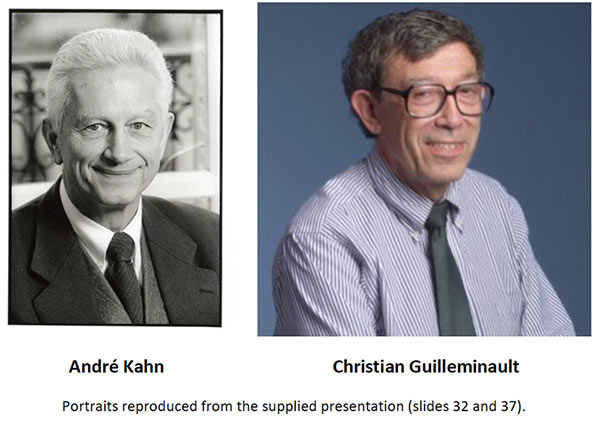
André Kahn helped initiate the project of an international pediatric sleep association. Christian Guilleminault was a scientific pioneer and a driving force in its foundation, later serving as IPSA President from 2014 to 2019. Their legacy is part of the association’s continuing commitment to children’s sleep health.
IPSA through the years
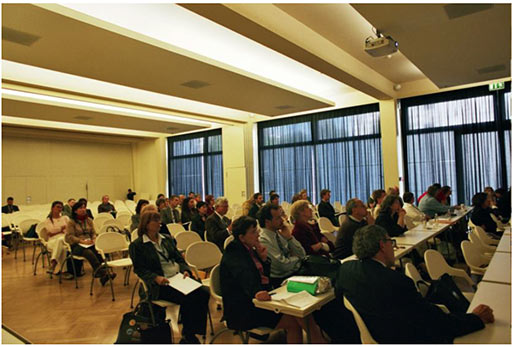
Berlin, 2005 — The IPSA founding meeting, held on 13 October during the World Association of Sleep Medicine congress.
Florence presentation, slide 37
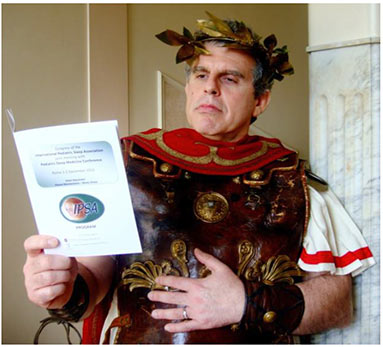
Rome, 2010 — David Gozal dressed as a Roman fighter, holding the program of the first independent IPSA congress, 3–5 December.
Florence presentation, slide 39; identification supplied by Oliviero Bruni
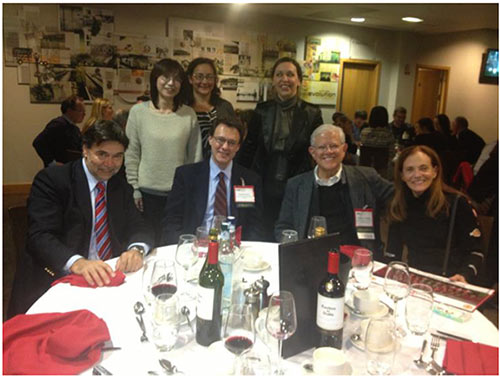
Manchester, 2012 — Colleagues gathered during the second IPSA congress.
Florence presentation, slide 40
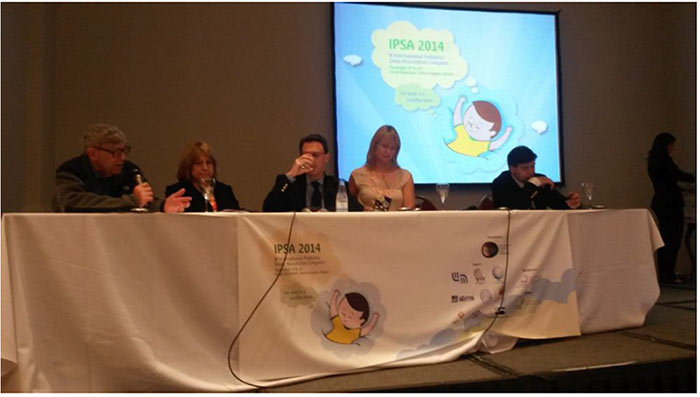
Porto Alegre, 2014 — A panel session at the third IPSA congress.
Florence presentation, slide 41
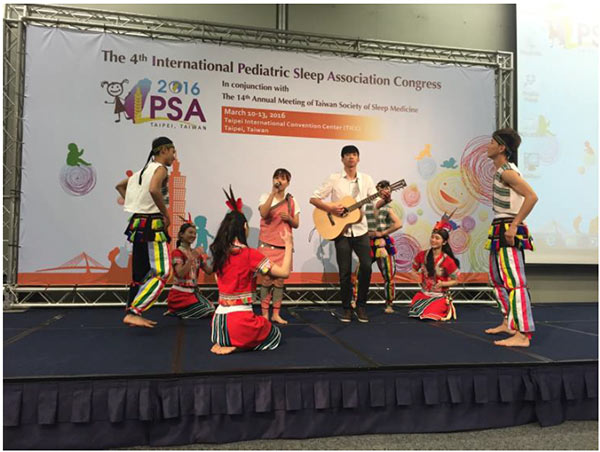
Taipei, 2016 — A cultural performance during the fourth IPSA congress.
Florence presentation, slide 42
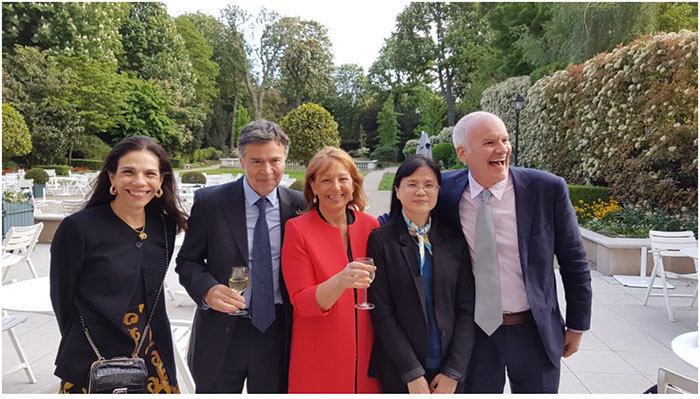
Paris, 2018 — Colleagues together during the fifth IPSA congress.
Florence presentation, slide 43
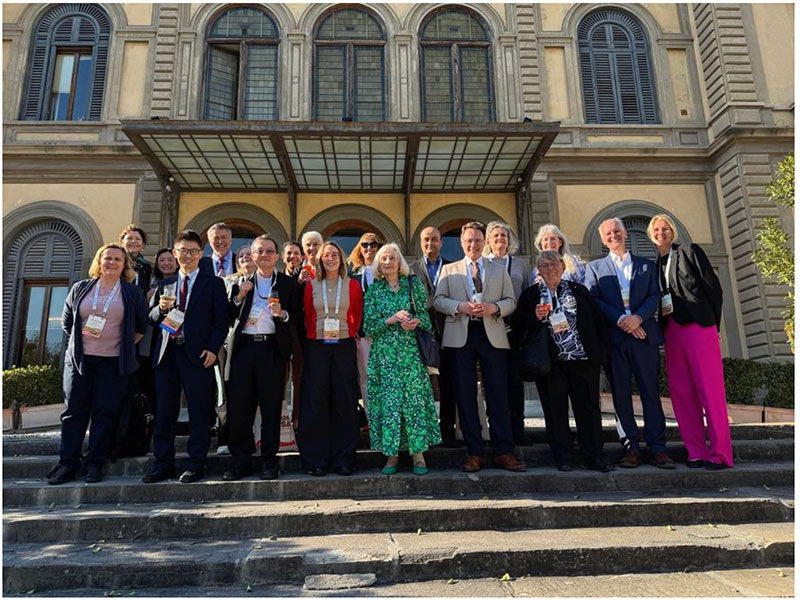
Florence, 2026 — Group photograph from the ninth IPSA congress, 8–11 April 2026.
Photograph supplied by Oliviero Bruni